Why Some Whites Look Dingy in Pittsburgh Homes During Winter
Why Some Whites Look Dingy in Pittsburgh Homes During Winter
Why Some Whites Look Dingy in Pittsburgh Homes During Winter
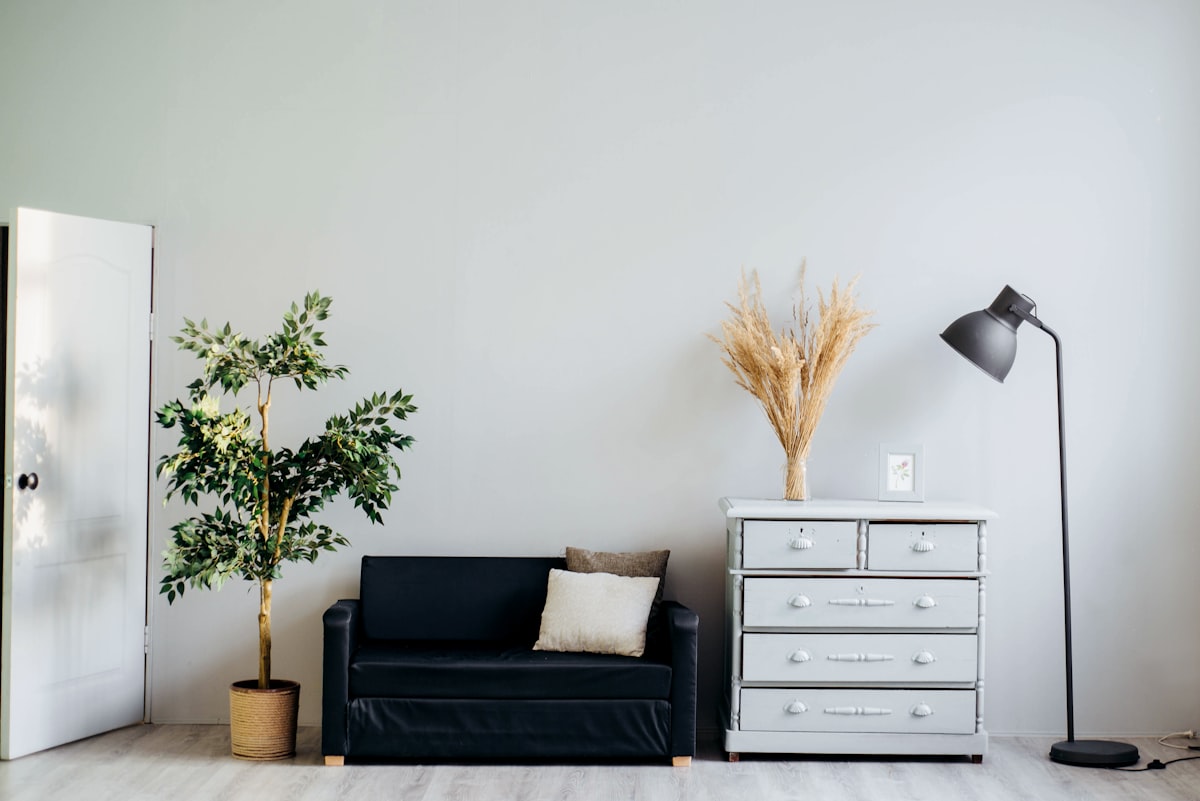
It is a scenario familiar to almost every Pittsburgh homeowner. You spend hours on Pinterest or Instagram, scrolling through images of airy, crisp, all-white living rooms. You head to the paint store, confident in your choice of "Pure White" or "Chantilly Lace." You spend a weekend painting, envisioning a bright, modern transformation.
Then, January hits.
The vibrant, clean white walls you loved in the showroom or during the sunny days of September suddenly shift. Instead of feeling bright and expansive, the room feels cold. The corners look shadowy and gray. In the worst cases, the walls take on a dingy, almost dirty cast, as if they haven't been washed in years.
You haven't chosen a bad paint brand, and your walls aren't actually dirty. You are simply experiencing a collision between color theory and Pittsburgh's unique winter climate.
White is the most complex "non-color" in the spectrum. It is essentially a mirror, reflecting everything around it. When you live in a city where the sky acts as a giant gray filter for five months of the year, that mirror reflects the gloom.
This guide will deconstruct why white paint fails in Pittsburgh winters, the science behind the "dingy" phenomenon. Our guide on how Pittsburgh's gray skies change paint color perception explains the underlying physics., and how you can choose the right shade of white to keep your home feeling warm. For professional interior painting services that account for Pittsburgh's unique lighting, and inviting, even when the forecast calls for another week of overcast skies.
The Science of White: It's Not Just One Color
To understand why your walls look gray, you first have to understand what white paint actually is. We tend to think of white as the absence of color, but in the world of architectural coatings, white is a reflector.
Every paint color has a Light Reflectance Value (LRV), measured on a scale from 0 (pure black) to 100 (pure white). Most white paints sit somewhere between 80 and 94. A high LRV means the paint bounces the vast majority of light back into the room.
However, paint can only reflect the light it receives. It cannot create light.
The Mirror Effect
If you shine a warm, golden flashlight on a white wall, the wall looks warm and golden. If you shine a cool, blue flashlight on the same wall, it looks icy and blue.
In a Pittsburgh winter, the "flashlight" illuminating your home is the sun filtered through heavy, consistent cloud cover. This natural light has a very high Kelvin color temperature—often ranging from 6000K to 7500K. To the human eye, this light is "cool," leaning heavily toward blue and gray wavelengths.
When this cool, flat light hits a stark white wall with a high LRV, the wall does its job perfectly: it reflects that gray light back at you. The result is a room that feels shadowy and dull because the wall is faithfully reporting the weather outside.
The Undertone Problem: Cool vs. Warm Whites
The biggest mistake homeowners make is assuming all whites are neutral. In reality, almost every white paint on the market has an undertone—a tiny amount of pigment added to the white base to give it character. These undertones are usually yellow, blue, pink, or green.
In the context of a Pittsburgh winter, the battle is between Cool Whites and Warm Whites.
Why Cool Whites Fail in January
Cool whites have blue, gray, or black undertones. They are designed to look crisp, modern, and gallery-like. In a home in Miami or Phoenix, where the sunlight is intense and yellow, cool whites look fantastic because they balance out the heat of the sun.
In Pittsburgh, however, a cool white is a disaster in winter.
The Double Down Effect: When the blue-heavy winter light hits a white paint with blue undertones, the effect is amplified. The wall doesn't just look white; it looks like a sheet of ice.
The Shadow Trap: Cool whites are terrible at handling shadows. In the corners of a room where light doesn't hit directly, cool whites tend to turn a muddy gray. This is often what homeowners perceive as "dinginess." It looks like dust or soot, but it is simply a lack of warm reflection.
Why "Pure" Whites Look Flat
"Pure" or "untinted" whites contain no pigment at all. They are just the raw titanium dioxide base. While this sounds clean, it is visually lifeless. Without any pigment to interact with the light, a pure white wall has no depth. When the light outside is flat (no direct sunbeams, just ambient cloud light), the wall becomes flat too. It loses its definition, making the room feel like a sterile box or a cloudy day brought indoors.
The Solution: The Power of Yellow Undertones
If the problem is that the Pittsburgh light is too cool (blue), the solution lies on the opposite side of the color wheel. You need warmth (yellow/orange) to neutralize the cool light.
This is why interior designers in the Northeast and Midwest often steer clients toward Warm Whites or Off-Whites. For more guidance on choosing warm paint colors for Pittsburgh winters,
How Warm Whites Work
Warm whites contain trace amounts of yellow, red, or ochre pigment. You might fear that choosing a "creamy" white will make your house look like a stick of butter, but trust the physics.
When the cool, blue winter daylight hits a wall painted with a creamy white:
The yellow pigment in the paint absorbs some of the blue wavelengths from the light.
The remaining light is reflected back into the room.
Because the blue has been neutralized, the eye perceives the wall as a softer, more neutral white, rather than a yellow one.
Essentially, the "dingy" gray light is filtered by the paint itself. The pigment acts as a color corrector. A white that looks distinctly cream or ivory on the swatch in the store will often look like a perfect, soft white on your walls in January.
The Impact of Room Orientation
Not every room in your house receives the same kind of light, even under a blanket of clouds. The direction your windows face plays a massive role in whether a white will look crisp or dingy.
North-Facing Rooms (The Danger Zone)
In Pittsburgh, north-facing rooms are the hardest to paint white. They never receive direct sunlight. The light they get is indirect and consistently cool, regardless of the season.
The Risk: Stark whites will look gray 100% of the time.
The Fix: You must go with a heavy cream or a beige-white here. You need significantly more warm pigment to trick the eye into seeing light. Colors that seem "too yellow" on the chip are often the only ones that survive a north-facing Pittsburgh room.
South-Facing Rooms (The Exception)
South-facing rooms get the most light. Even on a cloudy day, the light intensity is higher.
The Risk: If you use a very yellow-white here, it might actually look yellow when the sun does come out.
The Fix: You have more flexibility. You can use neutral whites or softer off-whites. The natural brightness of the room helps prevent the dingy look.
East and West (The Chameleons)
East: Gets cool morning light (dingy risk) and loses light in the afternoon. Warm whites help wake up the space in the morning.
West: Gets shadows in the morning and warmer light in the afternoon. A neutral white can work here, but shadows in the morning might still look gray.
The Role of Artificial Lighting
We cannot talk about Pittsburgh winters without talking about lamps. For many of us, the lights are on by 4:00 PM. The dingy look often happens in that transitional time—twilight—where there is not enough natural light to brighten the paint, but the artificial lights haven't fully taken over.
Your light bulbs are the greatest tool you have to fix a dingy wall.
Kelvin Temperature Matters
Just like the sun, your light bulbs have a color temperature.
5000K (Daylight): These bulbs mimic the blue-white of noon sun. Using these in a room with white walls in winter will make the room feel like a hospital. It reinforces the coldness.
2700K - 3000K (Soft White): These bulbs mimic the warm glow of incandescent filaments. They cast a yellow-orange light.
If your white walls look gray and lifeless, swap your bulbs for 2700K or 3000K LEDs. This artificial warmth will activate the warm undertones in your paint (or add warmth to a neutral white), instantly banishing the gray cast.
The Importance of Layered Light
A single overhead light creates harsh shadows in the corners of a room. Shadows = Dinginess. To make white walls look clean and bright, you need to wash the walls with light.
Floor Lamps: Bounce light off the ceiling to diffuse it.
Table Lamps: Create pools of warmth at eye level.
Sconces: Direct light onto the walls themselves.
By eliminating deep shadows, you eliminate the places where the "dingy" gray tone likes to hide.
Context Clues: What Else is in the Room?
White paint does not exist in a vacuum. The phenomenon of "simultaneous contrast" means that the colors next to your white paint change how you see the white paint.
The Snow Effect
On the days when we do have snow on the ground, the light entering your windows changes again. Snow reflects sunlight upward into your home. This light is incredibly bright and crisp white.
Effect: It can make creamy whites look yellow by comparison, or it can make cool whites look even bluer.
Advice: Don't choose your paint color based on how it looks on a snowy day. Snow is temporary; the gray sky is the baseline.
Floors and Furniture
Dark Floors: Dark hardwood or carpet absorbs light, reducing the amount of light bouncing around the room. This makes walls appear darker and potentially dingier. If you have dark floors, you need a white with a higher LRV (more reflective) to compensate.
Greenery/Trees: In some Pittsburgh neighborhoods, houses are close to large evergreens or pine trees. Green light reflecting off trees can enter the window and turn a white wall sickly green. In this case, a white with a subtle pink or red undertone can neutralize the green.
Testing: How to Avoid the Mistake
You cannot trust the paint chip in the hardware store. The industrial fluorescent lighting in the store is completely different from your living room. You must test your whites in situ, specifically during the winter months.
The Vertical Test
Never paint a swatch flat on a table or floor. Light hits horizontal surfaces differently than vertical ones. Tape your sample to the wall at eye level.
The Isolation Method
If you paint a swatch of new creamy white directly onto your old, dingy gray-white wall, the new paint will look yellow by comparison.
The Trick: Paint your sample on a large poster board. Leave a one-inch border of unpainted white poster board around the edges. This clean white border acts as a palate cleanser for your eye, allowing you to see the true undertone of the paint without interference from the old wall color.
Move it Around
Move your sample board to different walls.
The Window Wall: This wall is usually the darkest because it gets no direct light (light comes through the window, not onto the wall next to it). Whites often look dingiest here.
The Opposite Wall: This wall gets the most light.
The "Lights Off" Test
Check the color in the middle of a gray Tuesday with the lights off. Does it hold its own? Does it look like a smudge of fog, or does it retain a sense of brightness? If it turns to shadow immediately, it lacks the warmth or LRV needed for your room.
Practical Recommendations for Pittsburgh Homes
While every home is different, certain white paints have a track record of performing well in our specific climate.
If you want a "Clean" White:
Avoid stark architectural whites. Look for "Soft Whites."
Example: Benjamin Moore White Dove. It has a tiny bit of gray and yellow, making it soft and luminous without being yellow. It is a Pittsburgh favorite for a reason.
Example: Sherwin-Williams Alabaster. Slightly warmer than White Dove, it holds up beautifully in north-facing rooms without turning pink.
If you want a "Warm" White:
Lean into the cream.
Example: Benjamin Moore Swiss Coffee. A staple for designers. It is creamy and rich, counteracting the gloom effectively.
Example: Sherwin-Williams Greek Villa. A sunny, bright white that doesn't veer too far into yellow territory.
If you want a "Modern" White:
If you insist on a cooler look, choose a white with a greige (gray/beige) undertone rather than a blue one.
Example: Sherwin-Williams Shoji White. It straddles the line between white and beige, providing depth that prevents the "dingy" look while still feeling modern.
Conclusion: Embrace the Warmth
The quest for the perfect white wall in Pittsburgh is really a quest for light. We crave brightness because the winter denies it to us. But trying to force brightness with a stark, cold white paint is a battle you will lose against physics.
The "dingy" look is simply a sign that your room needs more warmth. By shifting your perception and embracing whites with softer, creamier undertones, you stop fighting the Pittsburgh gray and start counterbalancing it.
A white wall shouldn't feel like a glacier; it should feel like a canvas. It should reflect the warmth of your home, not the cold of the sky. So, when you work with interior painting professionals this January, don't be afraid of a little pigment. It's the secret ingredient that turns a gray, gloomy room into a bright, welcoming sanctuary.