Restore Your Historic Home With COLOR
Pittsburgh's historic homes—from Victorian mansions in Shadyside to Craftsman bungalows in Dormont—represent architectural treasures that deserve thoughtful restoration. When it's time to paint, understanding how to choose historically appropriate colors while meeting modern durability requirements transforms your restoration from ordinary to exceptional. Let's explore how to restore your Pittsburgh historic home with color choices that honor the past while protecting the future.

Understanding Pittsburgh's Historic Architecture
Pittsburgh's architectural heritage spans multiple eras, each with distinctive color traditions. Understanding your home's era helps guide appropriate color selections.
Victorian Era (1837-1901)
Victorian homes embrace rich, complex color schemes:
- Deep jewel tones: Burgundy, forest green, gold, navy
- Multiple body colors: Often 3-5 colors highlighting different elements
- Contrasting trim: Cream, ivory, or dark chocolate browns
- Ornamental highlighting: Bright accents on decorative elements
Queen Anne Style (1880-1910)
Queen Anne homes particularly benefit from multi-color schemes:
- Body colors: Deep reds, olive greens, mustard yellows
- Trim colors: Often cream or darker contrasting tones
- Accent colors: Picking out spindles, brackets, and decorative details
- Front door: Distinctive color drawing attention to the entry
Craftsman Era (1905-1930)
Craftsman homes favor earthy, natural palettes:
- Body colors: Muted greens, warm browns, soft olive, forest green
- Natural tones: Colors inspired by wood, stone, and nature
- Trim: Often natural wood stain or complementary earth tones
- Simple schemes: Usually 2-3 colors maximum
Colonial Revival (1880-1955)
Colonial Revival homes suit more subdued palettes:
- Classic colors: Whites, creams, soft yellows, muted blues
- Traditional combinations: White body with dark shutters
- Trim emphasis: Often bright white against colored bodies
- Historical accuracy: Colors matching 18th-century precedents

Researching Your Home's Original Colors
The most accurate restoration starts with discovering what colors originally graced your home. Several approaches can reveal this history.
Physical Investigation
Your home's surfaces contain color history:
- Paint archaeology: Professional scraping reveals layer sequences
- Protected areas: Under porch ceilings, behind shutters, inside trim joints
- Wallpaper remnants: Can indicate original color schemes
- Hardware marks: Original screw holes may show paint layers
Historical Resources
Pittsburgh offers excellent resources for color research:
- Pittsburgh History & Landmarks Foundation: Architectural records and guidance
- Historic Preservation Commission: Color guidelines for designated districts
- Original photographs: Can hint at relative color values
- Period paint catalogs: Document available colors by era
Neighborhood Context
Consider your home's relationship to its surroundings:
- What colors do similar-era homes in your neighborhood feature?
- Are there designated historic district guidelines?
- How does your home relate to adjacent properties?
Historic Color Palettes That Work
Classic Victorian Combinations
- Deep burgundy body with cream trim and forest green accents
- Olive green body with terracotta accents and ivory trim
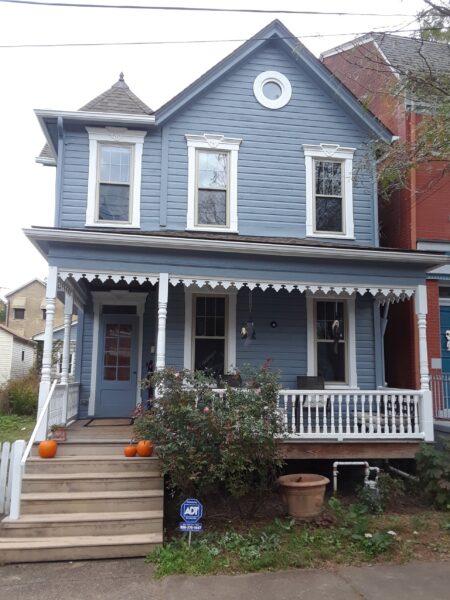
- Slate blue body with chocolate trim and gold accents
- Mustard gold body with hunter green trim and burgundy door
Craftsman Combinations
- Forest green body with natural wood trim and dark green accents
- Warm brown body with ivory trim and dark brown accents
- Olive sage body with cream trim and brown door
- Taupe body with white trim and burgundy accents
Colonial Revival Combinations
- Soft yellow body with white trim and black shutters
- Light gray body with white trim and burgundy door
- White body with dark green shutters and black accents
- Pale blue body with white trim and navy accents
Preparation Challenges on Historic Homes
Historic homes require more extensive preparation than newer properties. Multiple paint layers, deteriorating substrates, and unique materials all demand careful attention.
Lead Paint Considerations
Homes built before 1978 likely contain lead paint:
- Testing: Essential before any scraping or sanding
- EPA RRP Rule: Certified contractors required for lead paint work
- Safe work practices: Containment, personal protection, proper disposal
- Encapsulation options: Sometimes preferred over complete removal
Surface Restoration
Historic surfaces need more than basic prep:
- Stripping multiple layers: When paint buildup obscures details
- Wood consolidation: Stabilizing deteriorated wood
- Caulking replacement: Period-appropriate methods
- Priming strategies: Adhesion to aged, painted surfaces
Detail Preservation
Historic homes feature ornamental details that require protection:
- Gingerbread trim: Delicate details easily damaged
- Decorative elements: Brackets, spindles, moldings
- Window components: Sash weights, original glass, hardware
- Original doors: Multi-panel configurations with intricate profiles
Modern Paint Products for Historic Homes
Today's paint technology offers superior protection while respecting historical aesthetics.
Acrylic Latex Benefits
Modern acrylic latex paints offer significant advantages:
- Flexibility: Expands and contracts with temperature changes
- Breathability: Allows moisture to escape from old wood
- Durability: Superior weather resistance
- Easy cleanup: Water-based formula
- Low VOC: Safer for occupants and environment
When Oil-Based Makes Sense
Some situations still favor alkyd (oil-based) products:
- High-wear surfaces: Front doors, porch floors, railings
- Previously oil-painted surfaces: Better adhesion in some cases
- Stain blocking: Preventing bleed-through from old wood
Working with Historic Districts
Many Pittsburgh neighborhoods have historic district designations that govern exterior changes, including paint colors.
Understanding Local Requirements
- Certificate of Appropriateness: May be required before exterior painting
- Approved color palettes: Some districts specify acceptable colors
- Application process: Plan for review time before starting
- Consultation resources: Staff can help with appropriate selections
Working Within Guidelines
Historic district requirements shouldn't limit creativity:
- Guidelines typically allow range of historically appropriate options
- Professional painters familiar with district requirements can assist
- Period-accurate colors are usually available in modern formulations
Frequently Asked Questions About Historic Home Painting
Do I have to use original colors on my historic home?
In historic districts, regulations may require historically appropriate colors. In non-designated areas, you have more flexibility—but period-appropriate colors typically enhance your home's value and appearance.
How long should paint last on a historic home?
With proper preparation and quality products, exterior paint on historic homes should last 8-12 years. Heavily detailed areas may require touch-ups sooner as they're more exposed to weathering.
Can modern colors work on historic homes?
Contemporary colors can work, but they often look out of place on period architecture. Historically inspired palettes—even if not exact reproductions—generally enhance rather than detract from your home's character.
Should I strip all old paint from my historic home?
Complete stripping is rarely necessary and can damage historic surfaces. Usually, removing loose and failing paint while maintaining sound existing paint provides the best substrate for new finishes.
How do I handle lead paint on my historic home?
EPA-certified contractors can safely address lead paint using proper containment and work practices. Complete removal isn't always necessary—encapsulation often provides safe, effective protection.
Is it worth investing more in historic home painting?
Historic homes benefit significantly from professional painting that respects their character. Proper work protects substantial property value and maintains the architectural heritage that makes your home special.
Professional Historic Home Painting in Pittsburgh
At Fagan Painting LLC, we understand what makes Pittsburgh's historic homes special. Our team has extensive experience working on period properties throughout the region, from Victorian Shadyside mansions to Craftsman Dormont bungalows.
We provide expert color consultation, thorough preparation including EPA-certified lead paint handling, and flawless application that honors your home's heritage while protecting it for decades to come.
Contact us for a free estimate on your historic home exterior painting or interior restoration. We serve Pittsburgh and surrounding communities including Squirrel Hill, Shadyside, Sewickley, and throughout the region.