Color Strategies and Interior Paint Schemes
Choosing colors for your Pittsburgh home can feel overwhelming with thousands of options available. But understanding Pittsburgh color strategies and interior paint schemes transforms this daunting task into an enjoyable process. The right color strategy creates cohesive, beautiful spaces that reflect your personality while flowing naturally throughout your home.
Understanding Color Theory Basics
Before diving into strategies, understanding basic color theory helps you make confident decisions.
The Color Wheel
- Primary colors: Red, blue, yellow—the foundation of all colors
- Secondary colors: Orange, green, purple—created by mixing primaries
- Tertiary colors: Combinations like red-orange or blue-green
Color Relationships
- Complementary: Colors opposite on the wheel (blue and orange)
- Analogous: Colors next to each other (blue, blue-green, green)
- Triadic: Three colors equally spaced (red, yellow, blue)
- Monochromatic: Various shades of one color
Creating a Whole-House Color Strategy
The key to Pittsburgh color strategies is planning your entire home as a cohesive unit, not selecting colors room by room.
Start With Your "Flow" Color
Choose one neutral color that appears throughout your home:
- Hallways, stairwells, and connecting spaces
- Creates visual continuity throughout
- Typically a warm or cool neutral
- Forms the backbone of your color scheme
Develop Your Palette
Build your whole-house palette around your flow color:
- 3-5 colors maximum for a cohesive feel
- One bold color for accent walls and focal points
- 2-3 supporting colors that complement each other
- Consistent trim color throughout
Room-by-Room Color Strategies
Living Areas
Living rooms and family rooms benefit from:
- Welcoming warm neutrals: Greiges, warm whites, soft taupes
- Accent colors: Introduce through one wall or decor
- Natural light considerations: Test colors at different times of day
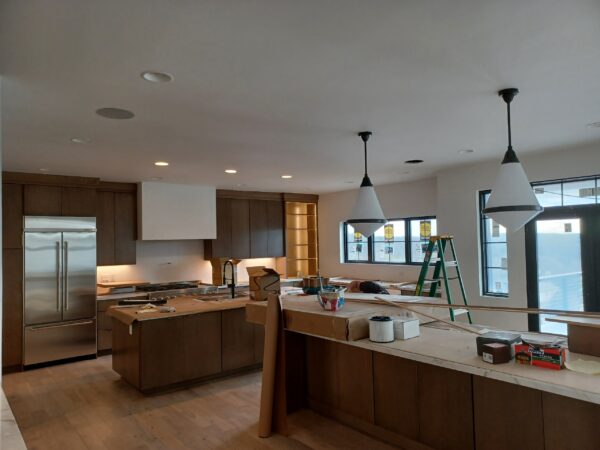
Kitchens
Kitchen color strategies should consider:
- Cabinet colors: Often the dominant color element
- Backsplash coordination: Wall color should complement, not compete
- Counter and appliance colors: Fixed elements to work around
Bedrooms
Create restful retreats with:
- Cool, calming tones: Blues, greens, soft lavenders
- Cozy warm tones: Soft terracottas, warm neutrals
- Consider light exposure: North-facing rooms may need warmer tones
Bathrooms
Bathroom color approaches include:
- Spa-like serenity: Soft blues, greens, and neutrals
- Bold statements: Powder rooms can handle drama
- Coordinate with fixtures: Consider existing tile and vanity colors
Pittsburgh-Specific Color Considerations
Pittsburgh's light conditions and architectural styles influence optimal color choices.
Light Quality
Pittsburgh's often overcast skies affect color perception:
- Northern exposure: Cool light makes warm colors appear truer
- Gray days: Colors may appear more muted than in the store
- Test at different times: Morning vs. evening light varies significantly
- Consider seasons: Winter light differs dramatically from summer
Architectural Styles
Match colors to your Pittsburgh home's character:
- Victorian: Rich, historical color palettes work well
- Craftsman: Earthy, natural tones complement woodwork
- Mid-century: Period-appropriate or modern updates
- Contemporary: Clean neutrals or bold statements
Popular Color Scheme Strategies
The 60-30-10 Rule
A classic approach to color distribution:
- 60%: Dominant color (walls and large surfaces)
- 30%: Secondary color (furniture, window treatments)
- 10%: Accent color (accessories, artwork, throw pillows)
Monochromatic Elegance
Using variations of one color creates sophisticated spaces:
- Choose one color family
- Vary the saturation and lightness
- Add texture for interest
- Include one contrasting element
Nature-Inspired Palettes
Pittsburgh's natural landscape offers color inspiration:
- River tones: Blues, grays, and steel influences
- Forest palettes: Greens, browns, and earth tones
- Seasonal colors: Autumn's warmth, spring's freshness
Common Color Mistakes to Avoid
- Choosing colors in-store: Always test in your actual space
- Ignoring undertones: All neutrals have warm or cool undertones
- Too many colors: Stick to 3-5 for cohesion
- Forgetting fixed elements: Flooring, counters, and cabinetry are part of your palette
- Painting before lighting: Finalize lighting before final color decisions
Frequently Asked Questions About Interior Color Strategies
How do I choose colors that work together?
Start with colors you love in existing elements—furniture, artwork, or rugs. Use these as inspiration for your palette. Colors that share undertones (all warm or all cool) naturally coordinate.
Should all rooms be different colors?
No. Using a common flow color in connecting spaces creates cohesion. Individual rooms can have accent colors, but the overall palette should be limited and coordinated.
How do I test paint colors effectively?
Paint large samples (at least 12x12 inches) on multiple walls. View them at different times of day and with different lighting. Live with samples for several days before deciding.
What if my furniture doesn't match my new paint colors?
Consider whether furniture can be updated with new upholstery or accessories. Neutral wall colors accommodate more furniture styles. Sometimes new paint reveals it's time to update furnishings too.
Is white paint boring?
White is anything but boring—there are thousands of white variations. The key is choosing the right undertone (warm, cool, or neutral) for your space and lighting conditions.
How do professionals help with color selection?
Professional painters like Fagan Painting bring experience with how colors actually look when applied. We can suggest palettes, identify undertones, and help you avoid costly mistakes.
Should I paint my trim the same color as walls?
It depends on the look you want. Same color creates modern seamlessness, while contrasting trim (typically white) highlights architectural details—both are valid strategies.
How often do color trends change?
Trends evolve constantly, but classic color strategies never go out of style. Choose colors you love rather than chasing trends if you want longevity.
Professional Color Guidance
Developing Pittsburgh color strategies for your home is both art and science. While this guide provides a solid foundation, nothing replaces experienced eyes that have seen how thousands of colors look in actual Pittsburgh homes.
At Fagan Painting LLC, we help Pittsburgh homeowners develop color schemes that enhance their homes and reflect their personalities. Our experience with local lighting conditions and architectural styles informs practical advice you can trust.
Contact us for a free estimate and color consultation. We serve Pittsburgh and surrounding communities including Squirrel Hill, Point Breeze, and throughout the region.